

















© 2025 Gurusisya Chess Academy. Designed by Caseyug Groups.
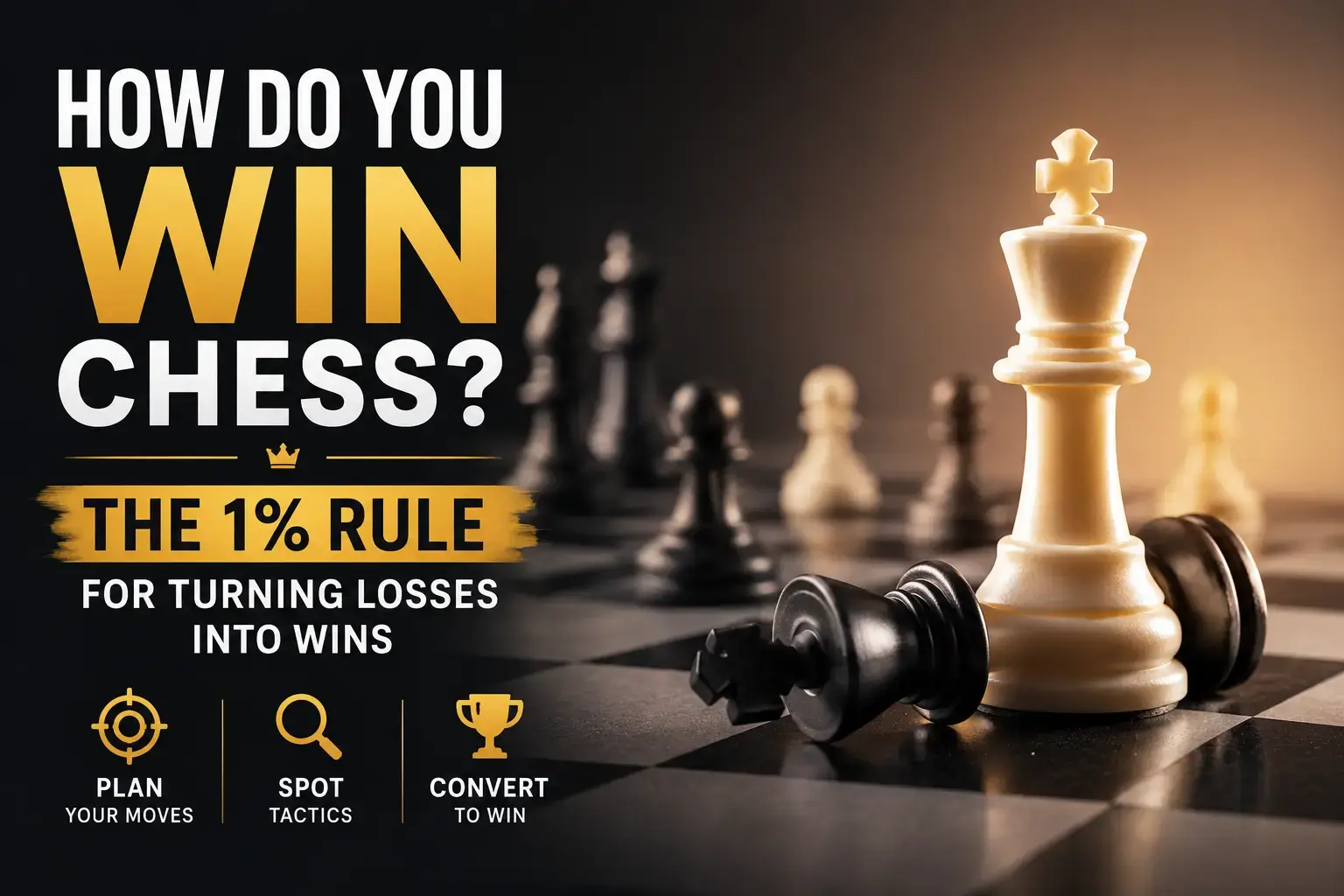
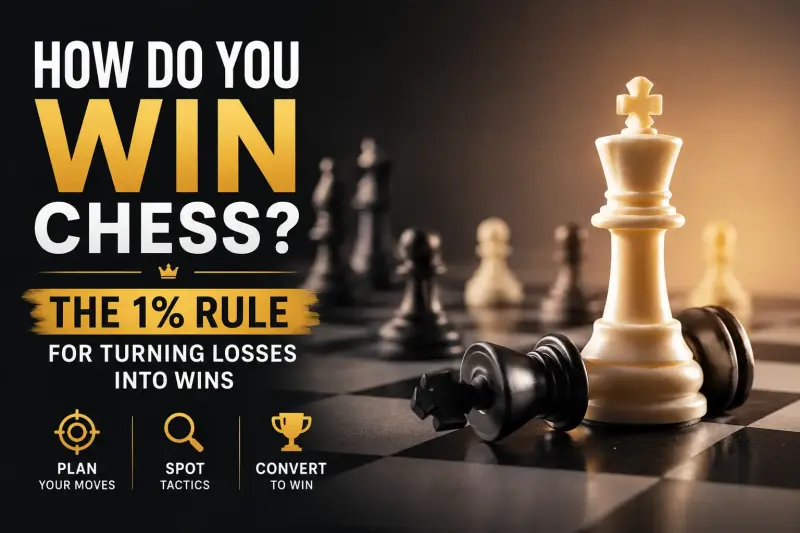
What are the best strategies for winning chess? It's a very easy question to ask, and yet so many of us sit for hours with our eyes glued to the 64 squares, only to end up shaking hands with our opponent, feeling like we've lost all.
I have been there. You have most likely been there before. We're taking 30 minutes to carefully place our pieces, feeling like a genius, and hanging a Queen in one move.
When it is you who "almost" wins, it's time to discuss how to actually get across the finish line. It's not that you're a math genius or you have a brain of a grandmaster. It’s about a system.
Chess players lose most of their games because they play in the manner of "hope chess”. Most chess players lose the game because they play “hope chess”.
You take a shot and you hope that your opponent doesn't see your threat. Or, you respond to what they're doing without a plan of your own. You are in the show, but the show is playing you!
The truth is chess is an information game. Each of your opponent’s moves is communicating something to you, but if you aren't reading the message you're going to get hit.
You spot a "good" move, you play it immediately and then—bam!—you realise that your Rook is caught. The biggest challenge for all club players is this cycle of blunder-regret-repeat.
It makes you feel that you're not smart enough for the game. I've had to deal with that sting. Not about IQ, it's about your process!
Think about the last game you lost. You probably had a better position. Maybe you were up a pawn or two.
You felt the win coming. Then, the tension started to build. Your heart rate went up. You missed a simple fork. Suddenly, the engine evaluation on your screen jumps from winning to losing.
That shift is brutal. It stays with you. You lie in bed thinking about that one move. This frustration is what keeps people from getting better.
They get stuck in a plateau where they know the rules, but they don't know how to win. In competitive play, the margin for error is thin.
Rating Category | Avg. Blunders per Game | Accuracy (%) |
|---|---|---|
Beginner (800-1000) | 4.2 | 65% |
Intermediate (1200-1500) | 2.1 | 78% |
Advanced (1800-2000) | 0.8 | 88% |
Master (2200+) | 0.2 | 94% |
If you don't have a way to stop these leaks, you will keep losing to people who are technically worse than you but more disciplined.
To win, we need to stop guessing. We need to move from "hope" to "calculation." Here is the blueprint us players use to actually secure the full point.
You don't need to be a grandmaster to win at chess - you just need to be in control of the board from the start.
As a matter of fact, knowledge of 20 moves of theory isn't even necessary to clinch the game. What you really need to focus on is the first move - and more specifically the center of the board.
The numbers are quite simple: 53% of the time, White comes out on top thanks to that initial advantage. To turn it to your advantage you've got to:
Get Pawns in the Center: Try placing your pawns on e4, d4, e5 or d5. This lets your pieces run free and make the most of the space available.
Got A Piece? Move it with a Purpose: Don't just randomly move a piece, move it to a spot where it's going to have an impact - whether that's attacking an opponent or defending your own position.
King Safety 101: 9 out of 10 times when you're an amateur player and you lose, it's because you've left your King stuck right in the middle of the board, like a sitting duck. Get it to safety and castle early
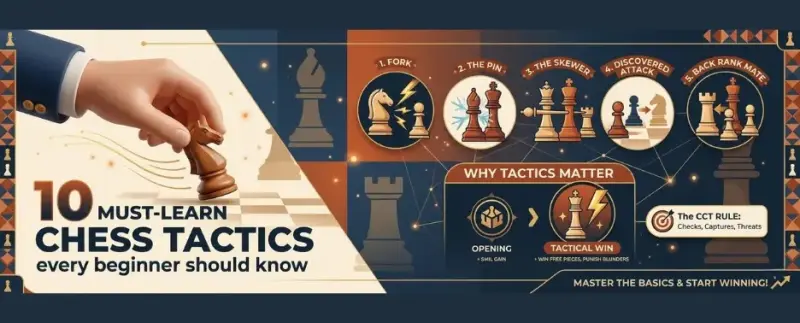
Tactics are how you actually win at the game. Below Master level, 80% of games are decided because of tactics - forks, the threat of pins, and the potential for skewers. Before any move, run through a "blunder check" in your head - think to yourself: "If I make this move, what chance do they have to take advantage?"
The Fork: A piece that puts pressure on not one but two of your opponents pieces.
The Pin: A piece that has to stay still because moving it would leave something even more valuable exposed
The Skewer: When you attack a big opponent piece, and then when it jumps out of the way you get the chance to take the piece behind it.
You need a plan in place. Take a good look at your board position and think about which piece is just hanging around and not really doing anything. Get it moving - its call the Principle of the Worst Piece
Another basic principle is Prophylaxis. This is all about stopping your opponent from getting what they want.
Right before you make a move, take a look at what your opponent is trying to do. If they're trying to jump that Knight in, move a pawn in to stop them.
When you take an option away from them they often get pretty frustrated and then make a mistake.
Let's check out actual figures. The World Chess Championship in 2021 was between Magnus Carlsen and Ian Nepomniachtchi. The first five games they were a draw. Then came Game 6.
The Data: It was the longest game in World Championship history, at 136 moves. It was almost 8 hours long.
The Result: The pressure and fatigue of the game had taken their toll on Nepomniachtchi and he made a slight inaccuracy late in the game. His accuracy decreased while Carlsen's remained good.
It wasn't a "magic" move that won Carlsen. He won because he kept his focus for a longer period. The lesson for us is that you need to keep up the pressure until their error rate goes up.
It's possible to play a perfect game in 40 moves and lose it in the endgame. The King and Pawn endgame can be won or drawn by a single square.
1.King Activity: In the endgame, your King is an attacking piece. Come to the center!
2.Pawn Promotion – A pawn can be a Queen. Save their lives with your life.
3. Endgame Basics: Rule of the Square. Only takes 5 minutes and saves dozens of points.
Chess is played between two humans. To win, you have to manage your own emotions.
The "Tilt" Factor: If you lose a piece, don't resign. Amateur players blunder back advantages 35% of the time. Stay in the game.
Time Management: Players lose more games by running out of time than by lack of knowledge. If it’s complex, think. If it’s simple, move.
Fear of Winning: Many players stop playing aggressively when they are winning. This is a mistake. Stay clinical.
We play chess to learn something challenging. We want to get that "feel" of a well-thought out plan. When you're losing all the time due to silly errors it takes the fun out of it.
Once you begin applying the system (controlling the center, looking for tactics, keeping yourself in the endgame calm) the game changes.
Now it's no longer a stressful climb, it starts to become a strategic challenge. You see the board differently from now on. Look for openings in the opponent's line-up. You are in control.
Chess is not a game for the grandmasters. It is 1% superior to the adjacent person. Just get them to work on each square!
The 2023 World Championship is not one in which Ding Liren was “better” than his opponent every time, but he was better in the last game of the tiebreaks, when he declined to draw and played for a win in a position he deemed to be equal. He was playing with his mind. He pushed. And he won.
Some push will have to be given. Follow the facts, follow the process and don't gamble for a win. Start taking it.
The board is ready. Your pieces are arranged in a line. You have a good sense of your areas of weakness.
This time, don't use them, but this time, don't use them! Observe the other player, wait for their error, and then when it occurs (and it will occur) be able to strike.
Winning is what it's all about at chess. Let’s get to work.
The latest information about shipping services and our promotions